i-D Magazine, London – April 30, 2000
i-D Magazine, London, 2000
REGENERATE ART
The current issue of Camera Austria consists entirely of blank, black pages, with "österreich 2000" written simply in the top right hand corner of each. Nothing demonstrates more effectively the shock of Austria's artistic community at the electoral success of Jörg Haider and his right wing Freedom Party, but this does not apply to Gottfried Helnwein.
The Austin Chronicle – April 14, 2000
The Austin Chronicle, 2000
MAGNETIC! RESONANT!
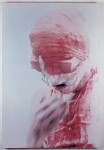
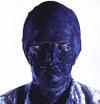
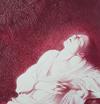
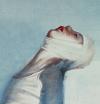
This made perfect sense, I thought, considering the visuals attached to their recent album Sehnsucht: portraits of the band by Gottfried Helnwein, the brilliant German artist whose gauze-wrapped and fork-embellished self-portrait had been an album cover for the Scorpions -- you know the one I'm talking about?
Helnwein had photographed the Rammstein faces after mangling and compromising them with arcane medical apparatus; and here I was, with my back mangled and compromised, being photographed by arcane medical apparatus! How very synchronistic it all was!
Why, Helnwein was probably out there right now, conducting the band in their concerted hammerstrikes, perhaps even forming a mini mosh pit with my wife or discussing the finer points of arcane medical apparatus-based face-mangling with the MRI tech! Of course! And there were streamers, too! Multicolored streamers that descended from the antiseptic rafters and twisted and shimmered like silken snakes dancing in time to the music ...
TANK Magazine – February 1, 2000
one man show at Robert Sandelson Gallery, London, 2000
THE AMERICAN PAINTINGS
These paintings are about America, I guess from a very European point of view.
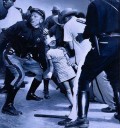
They're based on photographs, mainly newspaper photographs, of the Fifties and Sixties from archives in New York and L.A. Most people in these pictures are real people, caught in some long forgotten, petty events.
I rearranged the scenes, introduced new characters, and created new relationships and contexts. And then I painted them in black and blue.
That's how I remember America back then in the early Fifties in Vienna, where I was born. The big war had ended a few years ago, but the city still seemed undecided as to whether this was the end of the world or if life should go on.
It was a strange, sad and surreal world. The streets were empty, the houses dark - many of them in ruins from the bombings.
The few people I saw seemed ugly, clumsy, and depressed.
I never saw anybody laughing and I never heard anybody sing. It was a world without sound and colour. Everything moved in slow motion, like slime. We had no phones, no television, no cars, no music, no pictures, except the paintings of tortured people in the Roman Catholic church which made a deep impression on me, haunting me in the sleepless nights of my childhood limbo.
And then, without any warning, suddenly there was America.
When I saw the first picture of Elvis I was in a state of shock, because I couldn't believe that a human being could be so beautiful.
That was the beginning of the never-ending flood of American images that suddenly came over us and started to penetrate and transform everything.
Artweek, Celebrating 30 Years – November 30, 1999
Review of "The Darker Side of Playland: Childhood Imagery from teh Locan Collection" at SFMOMA
'THE DARKER SIDE OF PLAYLAND: CHILDHOOD IMAGERY FROM THE LOGAN COLLECTION' AT SFMOMA

San Fracisco Museum of Modern Art
In 'The Darker Side of Playland', the endearing cuteness of beloved toys and cartoon characters turns menacing and monstrous.
Much of the work has the quality of childhood nightmares. In those dreams, long before any adult understanding of the specific pains and evils that live holds, the familiar and comforting objects and images of a child's world are rent with something untoward.
Tank Magazine, Issue 6, London – August 31, 1999
Tank Magazine, London, 1999
GOTTFRIED HELNWEIN
In 1969 Helnwein painted a portrait of Adolf Hitler and was expelled from the art school on the grounds that any remainder of the National Socialist era was not only damaging to the school but to society at large. Repression of National Socialism had been official government policy, in which the Austrian people were complicit. Based on this situation, Helnwein developed a visual language of apocalyptic visions that can be understood all over the world.
NEWS Magazin, Wien – 16. Juni 1999
News, Wien, 1999
EIN KÜNSTLER VON WELTFORMAT
Ich schätze seine unendliche zeichnerische Qualität, seinen enormen künstlerischen Witz. Vom malerischen Können muß man gar nicht reden, da ist er Weltklasse.
Außerdem ist Helnwein ein überaus intelligenter und unruhiger Geist. Seine Übermalungsexperimente sind hochklassig: Luxusbilder, Weltkunst.
Austria Today, Nr. 23/99 – June 8, 1999
One-man show in the Dominican Church, Krems, Austria, 1999
PROPHECIES ALONG THE DANUBE
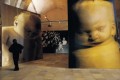
Apokalypse is also the title of a show which brings one of Austria's most controversial figures back to his home country. Gottfried Helnwein's work will be featured in his first solo exhibit in Austria in the past ten years.
Profil, Wien – 31. Mai 1999
Oscar Bronner, profil-Gründer erinnert sich, 1999
GRENZEN IN DIESEM LAND GESPRENGT
Oscar Bronner, und jetziger "Standard"- Herausgeber, über Gottfried Helnwein:
"Wir haben im Laufe der Zeit die wildesten Skandale dieses Landes penibel beschrieben, keiner dieser Berichte löst auch nur annähernd so eine Reaktion aus. Es ist interessant zu registrieren, dass ein Bilder stärker provoziert als ein Text, das Fiktion heftigere Reaktionen auslöst als ein Tatsachenbericht.
Der Grund dafür dürfte darin liegen, dass die Fantasie stärker angeregt und im Unterbewusstsein Schlummerndes angesprochen wird. Hier liegt noch ein weites Betätigungsfeld für Kummunikations-theoretiker."
Wenn ich heute diese Herausgeber-Briefe lese, so überfaellt mich Nostalgie. Über den Talenteschuppen profil und darüber, dass wir uns, obwohl es uns selbst nicht ganz leichtgefallen ist, mit Künstlern wie Helnwein oder Manfred Deix eingelassen haben. Ihre Power und die Aufbruchsstimmung rund ums profil haben einige Grenzen in diesem Land gesprengt.
Helnwein, Catalogue for Apokalypse – January 1, 1999
exhibition "APOKALYPSE" at Krems/Austria, 1999
AGAINST HARMLESSNESS IN ART
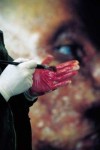
The enigma of Helnwein's paintings always has to do with guilt and atonement, perpetrators and victims, accusation and remorse. He has never escaped the Christian world of ideas and images of his childhood, but instead has used it for his own artistic purposes.
San Francisco Chronicle – October 31, 1998
One-man show at Modernism Gallery, San Francisco, 1998
SCHOCK TROOPER
Art viewers who consider themselves shockproof should take a look at German painter Gottfried Helnwein's show...